PA Clinical Rotation Costs: Plan for the Second Rent Problem
A PA program can be affordable on a tuition comparison and difficult to afford during an away rotation. The hidden question is whether you will pay for a room near the clinical site while still paying for the home you cannot easily leave.
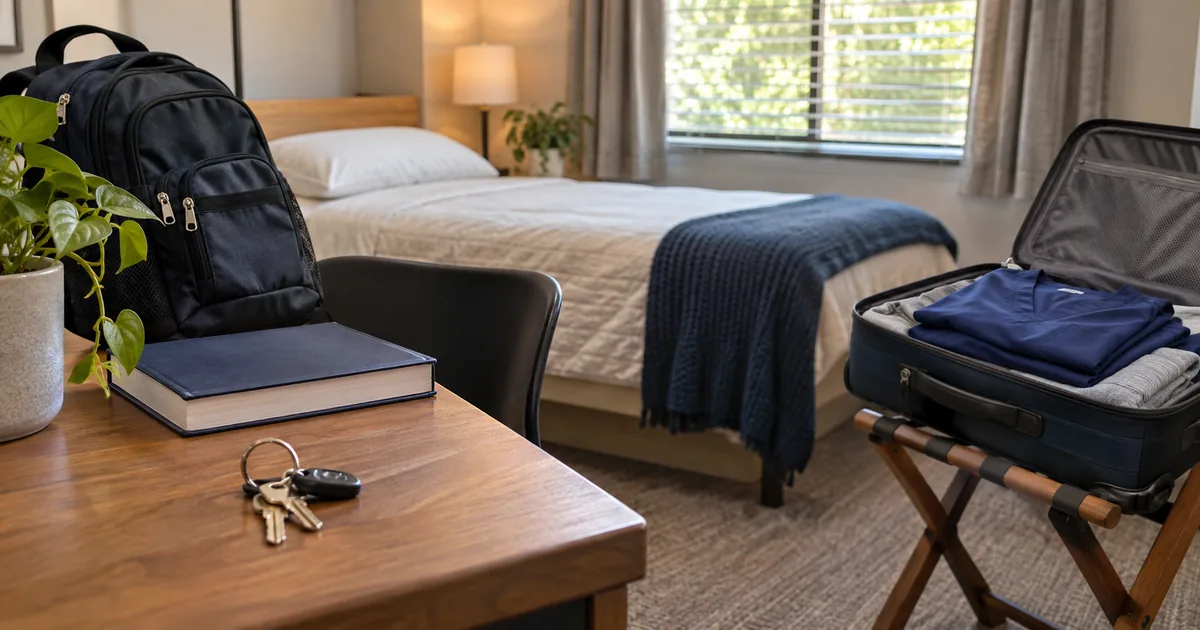
Before choosing a program, build a separate clinical-year housing and travel plan. It should answer where you may be assigned, which costs overlap and when cash is due. An annual living-expense total cannot answer all three.
Read the rotation geography before the apartment listings
Start with the program’s clinical placement policy. “Regional rotations” is not a distance, and “housing available” is not a reservation. Find out which placements are required, how much choice students have and whether assignments can change after housing arrangements are made.
For example, the University of Florida’s travel policy describes rotations up to 60 miles from a home base, possible assignments in other Florida cities and limited housing availability. It also describes returning to Gainesville for Clinical Day. Those details create several different travel questions, not one commuting estimate.
Jefferson’s Center City program describes possible relocation for clinical assignments and student responsibility for associated living and transportation costs. These are program examples checked October 27, 2026; use the policy for your own campus and entering class.
Give every expense one home in the budget
Separate costs that continue at your home base from costs caused by the rotation. Home rent may continue even when you are away. Away lodging adds another bill. Groceries may partly shift locations rather than double, while parking or a second set of basic household supplies may genuinely add cost.
The University of New Mexico’s cost information usefully distinguishes ordinary housing and transportation from away-rotation housing and travel. Borrow that separation for your own worksheet even if your amounts and locations differ.
| Budget line | Question to resolve |
|---|---|
| Home-base housing | Does the lease continue? Are utilities reduced or unchanged? |
| Away housing | Is lodging guaranteed, subsidized, shared or entirely your responsibility? |
| Travel to the placement | How will you move there and return? Is a vehicle required? |
| Local travel and parking | What does each scheduled day add? |
| Required campus returns | Do exams or meetings create separate trips? |
| Deposits and timing | What is due before the rotation, and what might be refunded later? |
A worked example: cost and cash are different
Consider a fictional four-week rotation. These figures are teaching assumptions, not estimates for a named program or rental market. The student keeps a $900 home lease, pays $1,100 for temporary lodging, spends $180 traveling to and from the placement and budgets $120 for local travel and parking.
Housing and travel expense for that block is $900 + $1,100 + $180 + $120 = $2,300. If the home rent was already in the ordinary monthly budget, the additional rotation expense is $1,400. Adding the full $2,300 on top of a budget that already contains the $900 lease would count that rent twice.
Now suppose the lodging also requires a $400 refundable deposit. The student may need access to $2,700 across these payments before receiving any refund. The deposit is a temporary cash requirement while refundable; it becomes an expense if some or all of it is retained. Record both possibilities without treating a promised refund as money already available.
This example excludes food, tuition, insurance and other ordinary expenses. A narrow calculation is useful only if its boundaries are visible. Add your remaining categories on separate lines rather than treating $2,300 as the complete cost of a month in PA school.
Draw the calendar, not just the total
Make one column for each rotation block, plus a column for the weeks before clinical training starts. Place lease deposits, moving costs and travel purchases in the month they must be paid. Then add the timing of confirmed resources. Ask the financial aid office about your actual award and disbursement schedule; an estimated cost-of-attendance allowance is not itself an approved funding source.
Run three location scenarios: a commuting placement, an away placement with confirmed housing support and an away placement without that support. Use written information where available. If the school cannot promise housing, keep the unsupported scenario visible instead of budgeting as though a room is guaranteed.
Ask questions that change the plan
Ask the clinical team how far in advance sites are assigned, what happens when a placement changes and whether the program has written housing arrangements. Ask whether those arrangements cover every student who needs them, what students still pay and whether you must retain housing near campus.
If you have children, dependents or another person sharing your lease, include their practical needs in the conversation. A temporary room that suits one student may not suit a family. Likewise, a possible sublet is not a confirmed offset: check your lease, obtain any required permission and avoid counting income you have not secured.
Finish with a one-page comparison for each program: expected location pattern, overlapping housing exposure, earliest cash requirement and unresolved questions. That makes a tuition comparison more honest. The cheapest published tuition and the easiest clinical-year budget do not necessarily belong to the same school.
Research checked October 27, 2026. Follow the linked official policy for your entering class; program rules and reporting dates can change.