Long-form writing on the pre-PA application cycle, the personal statement, school list strategy, and reapplicant work. Practitioner-built; roster refreshed August 2026.
How to enter PCE, HCE, shadowing, and volunteer hours in CASPA's Experiences section - categories, supervisor details, hour math, and honest reporting.
CNA, EMT, and medical assistant compared for pre-PA students - certification time, cost, and how fast each route reaches competitive PCE hour totals.
Whether medical scribe hours count as PCE or HCE for PA school, how programs actually classify them, and how to make scribing work in your application.
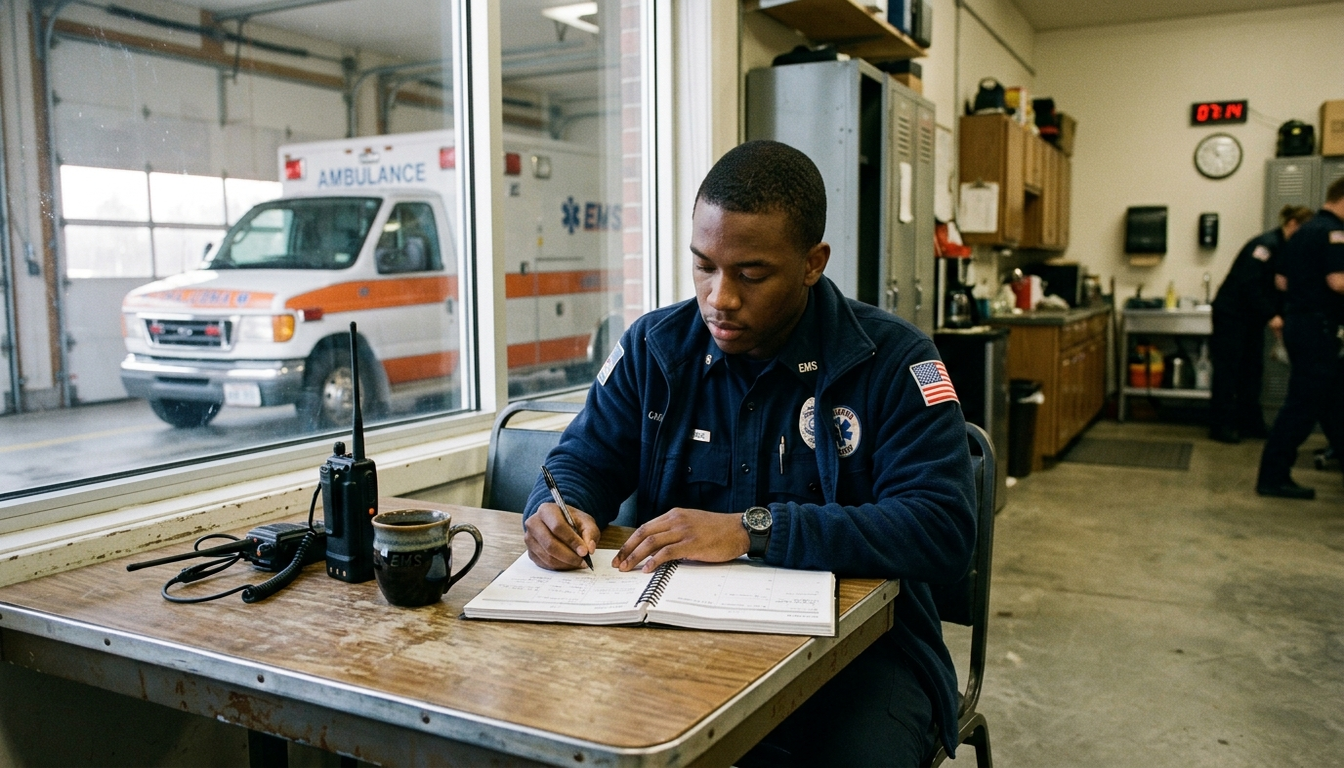
A month-by-month PA school gap year plan: pick a PCE job fast, bank 2,000+ patient care hours, and apply stronger next cycle.
Copy-paste email templates for requesting PA school letters of recommendation - professor, PA supervisor, and employer versions, plus reminder and thank-you emails.
The habits that earned your acceptance won't survive PA school. Here's the system that holds up - active recall, spaced repetition, and organizing by body system - and the few resources worth your money.
The advice everyone gives is relax and do nothing. That's half right. Here's the honest pre-matriculation playbook - deposits, immunizations, the move, your laptop, and your resources - so you arrive settled before the didactic firehose turns on.
PA and NP overlap more in scope than either profession admits. The differences that actually matter are the path to certification, the specialty mobility, and the regulatory landscape state by state.
About a third of PA matriculants are second-degree applicants - people who finished one bachelor's, worked in something else, and pivoted. The path is different from the traditional pre-PA path, and the application reads differently too.
About 30 PA programs explicitly orient their training around rural or medically underserved care. Here are the programs, what their mission alignment actually means in admissions, and what scholarships overlap.
A working RN already has the PCE most pre-PAs spend years building. The pivot is almost always GPA and prereq mapping, not experience. Here is what trips up the nursing-to-PA pathway and how to avoid it.
A bachelor's in English, finance, or art history is not a barrier to PA school as long as the prereqs are done. Here is the realistic path for applicants whose undergraduate major was not pre-med.
Class size affects everything from clinical site availability to faculty access to interview odds. Here are the largest, smallest, and most-balanced PA programs in the 2026-27 cycle, and how to use class size as a school-list filter.
Most PA programs run 24 to 28 months. A handful run longer. The extra time costs an additional $30,000 to $90,000 in tuition plus lost income - and applicants often choose longer programs without doing the math.
Anatomy and Physiology I and II are required at almost every PA program and they are the prereqs applicants get wrong most often - wrong sequence, wrong format, wrong recency. Here is how to take them right the first time.
PAEA 2024-25 data confirms what applicants have suspected for three cycles - matriculant GPAs are creeping up, and the gap between accepted and non-accepted is widening. Here is what the trend means for the 2026-27 cycle.
Military medics, corpsmen, and 68W combat medics often have the strongest PCE in their cohort. Here is how PA programs translate military medical roles to PCE hours, and which roles transfer cleanly.
Volunteer hours are the experience category most pre-PAs underweight, and admissions readers notice. Here is what counts as volunteer experience, what does not, and how to log it on CASPA without padding.
Most PA programs do not require shadowing as a formal minimum, but applicants who skip it usually regret it at interviews. Here is what counts, how to log hours, and where to find a PA willing to let you watch.
The PAEA 2025-26 Applicant and Matriculant Report dropped recently, and the trend lines from 2024-25 mostly held. Applicant volume up, matriculant GPA up, and one new shift on per-applicant program count.
The thank-you email is the application step everyone debates and very few people get clearly right. Here is the format that works, the timing that lands, and what not to write.
Two or three acceptances looks like a problem you wanted, until the deposit deadlines arrive and you realize you are picking blind. Here is the framework that beats gut feel.
Submitted CASPA in May. First decision in October. The gap between submission and decision is the longest stretch of the PA application cycle, and the timing varies more than most applicants realize.
Most PA programs require a $500 to $2,000 non-refundable deposit within two to four weeks of acceptance. The deposit is binding, the deadlines are tight, and there is more room to negotiate than most applicants realize.
Eight courses appear on almost every PA program prereq list. The other six to ten courses vary wildly. Here is the universal list, the variable list, and the order to take them in.
Roughly 40% of PA programs send a supplemental essay or program-specific application after CASPA. The prompts look generic but each one has a specific question buried inside. Here is how to read them and what to write.
The first PA program on CASPA costs about $200. The fifteenth program on CASPA costs $50. Plus supplemental fees, plus CASPer, plus interview travel. Here is the line-item reality of one application cycle.
Federal cap dropped to $100,000 lifetime in 2026. Most PA applicants enter at or near the cap from undergrad - private loans now cover most of program tuition. Here's the math, what to look for in a lender, and the shortlist applicants are actually using.
Three pre-PA scenarios under the July 2026 DOE rule reclassifying PA programs. First-time 2026-27 applicants, applicants building stats for 2027-28, and reapplicants from a denied 2025-26 cycle. Frameworks for each, no advice - just the math and the trade-offs.
Concrete numbers on what the July 2026 DOE rule means for PA school financing. Federal loan availability, private-loan gap, monthly payment under standard repayment, and what a starting PA salary actually supports.
The U.S. Department of Education's RISE rule moves PA programs from 'professional' to 'graduate' federal loan tier on July 1, 2026. Annual cap drops from $50,000 to $20,500. What this changes for the 2026-27 CASPA cycle.
CASPA's science GPA isn't your transcript's. The verifier reclassifies courses, applies retake math, and counts withdrawals its own way. Here's how it works.
The CASPA-verified GPA is what every PA program actually sees. It is not what your transcript says. Knowing the gap before you submit changes which schools you apply to - and how confidently you submit.
CASPA converts every quarter credit to semester credit by multiplying by 0.667 - UC, Stanford, Northwestern, Dartmouth. Here's how it reshapes your GPA.
The published minimum GPA at most PA programs is 3.0. The matriculant median is 3.7. The 0.7 gap is the single most actionable number in pre-PA strategy nobody explains until applicants are already a cycle behind.
The honest read on PA school competitiveness lives in the gap between published minimums and matriculant data. Here is how to use that gap to build a school list that gives you actual shots, not paper qualifications.
The full list of common PCE jobs and how they read on a CASPA application. Where scribing falls. Where CNA falls. Where it depends on the program.
Who to ask, when to ask, what to give them, and the specific failure modes that sink otherwise strong files. The working playbook for PA school letters of recommendation.

Total cost of attendance for PA school varies from $80,000 to $250,000 depending on program, in-state vs out-of-state status, and cost of living. The 2026 state-by-state breakdown.
How many people apply to PA school each year: 34,625 applicants, 12,636 matriculants, 8.45 apps each. The PAEA 2024-25 data for your 2026-27 cycle.

Some PA programs accept AP credit for prerequisites. Most do not. Almost no one publishes the full list. Here is the per-program AP credit policy for the 2026-27 cycle.
The PAEA average is 8.45 programs, but that number is wrong for almost everyone. Working ranges by stats, geography, and reapplicant status.
What PA school acceptance rates actually mean, why the 36% average misleads, and the program-by-program rates for the 2026-27 cycle.
Ten-year training cost, salary trajectory, scope of practice, day-to-day reality. The honest comparison between PA and MD careers for 2026, without the recruiter spin.
The patterns that quietly disqualify strong personal statements - mission-trip framing, MD-backup framing, the apostrophe-S misspelling, debt rationale - and how to write past them. Built from reading hundreds of PA personal statements.
Online prereq policy changed during the pandemic and never fully snapped back. Which programs still accept online courses, which require in-person labs, and the per-program split for the 2026-27 cycle.
Most PA programs limit how old your prereq coursework can be - usually 5, 7, or 10 years. The rule is buried on every program website and decides which prereqs you have to retake. Here is the per-program list nobody else publishes.
About a sixth of PA programs require CASPer for the 2026-27 cycle. Here is which ones, what the test actually evaluates, and how to prepare without overdoing it.
If your PCE hours are short, here is the working list of accredited PA programs that publish a minimum below 500 hours, plus the programs with no published minimum at all. Verified for the 2026-27 cycle.
The 40 questions you actually get asked, the answer framework that survives nerves, and the ethical and MMI scenarios refreshed for the 2026-27 cycle. Built by a PA who interviewed at five programs.
The difference between PCE and HCE, the per-program PCE/HCE split for 2026-27, and exactly what counts as which.
You get flagged as a reapplicant after the first cycle, and that flag changes the bar for entry. The reapplicant playbook for the 2026-27 cycle, written by a three-cycle reapplicant who matriculated.
CASPA 2026-27 added a mandatory essay on AI in healthcare and clarified what AI tools are permitted. The line is clearer than the panic about it. Here is what the rule actually says, and how to write inside it.
The GRE is fading. 85 of 337 PA program listings still require it (25%, current roster). The complete list of programs that do not require the GRE for the 2026-27 cycle, plus the strategic context.
Roughly half of accredited PA programs use rolling admissions. The split decides whether early submission helps you or not. Here is the full list, sorted by review style, for the 2026-27 cycle.
No articles match your search. Try a different keyword or clear the search.