CASPA 2026-27 Application Timeline: Every Deadline, Every Window
The 2026-27 CASPA cycle opened April 30 and is in full swing. If you are reading this mid-cycle, you are either on schedule, or you are worried you are not. I want to walk you through every deadline that actually matters this cycle, in the order they hit, with notes on the ones that quietly decide whether you matriculate or wait another year.
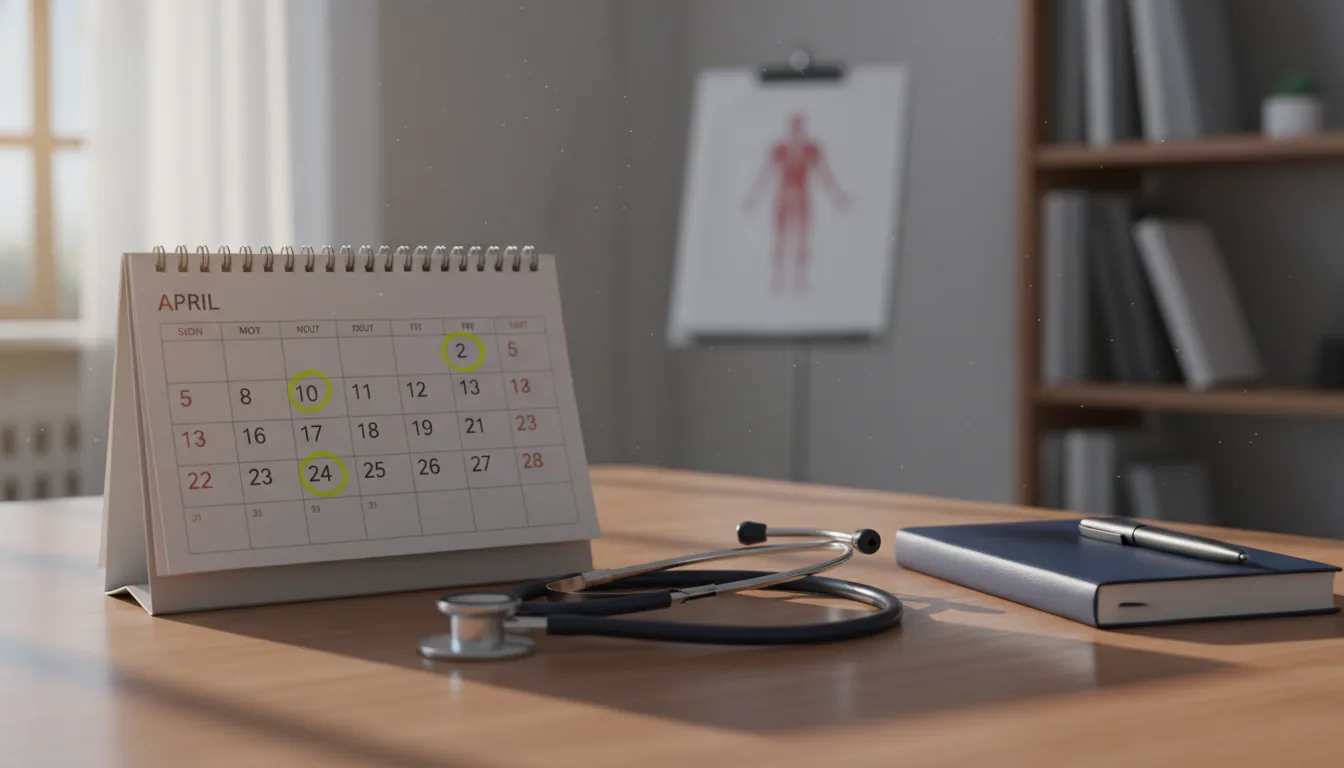
What took me a few cycles to figure out is that the calendar isn't really 12 months long for PA school applicants. The competitive window is closer to ten weeks - late April through early July. Programs that say they have a December deadline are usually not interviewing past September. The cycle is a sprint disguised as a marathon.
This guide is the cycle laid out in plain order. The goal is for you to walk away knowing what to do this week, this month, and through the end of the application window, with the dates that decide outcomes pulled out so you don't miss them.
What CASPA 2026-27 actually looks like
CASPA - the Centralized Application Service for Physician Assistants, run by Liaison On behalf of PAEA - is the single application portal that almost every accredited PA program in the United States uses. You enter your coursework, transcripts, work experience, references, and personal statement once, and CASPA pushes the verified application out to every program you select. The 2026-27 cycle is the application window that feeds programs starting in 2027 and a handful starting in late 2026.
Two facts about this cycle that you probably already know but I want to put on the page:
- The cycle opens April 30, 2026. That is the first day you can begin entering data into the application. The portal is live, but verified applications do not start landing in program inboxes for several weeks after that.
- Programs set their own deadlines, but most are early enough that you will feel rushed even if you start on day one. Some programs close their applications as early as September. Others stay open through April 1 of the following year, which sounds generous until you find out they were already past full interview capacity in November.
The dates below are the ones that govern the rhythm of this cycle. Read them once, then I will walk you through what each one means in practice.
CASPA 2026-27 critical dates
| Date | What happens |
|---|---|
| April 30, 2026 | CASPA 2026-27 opens. You can begin entering coursework, work experience, references, and your personal statement. |
| Late May 2026 | Earliest verified applications start being released to programs. Verification at this point is fast - often inside two weeks. |
| June 1, 2026 | The Golden Goal submit date. Submitting by this point keeps you in the early review pile at most rolling-admissions programs. |
| Late June – July 2026 | Most rolling programs begin reviewing complete files. First interview invitations go out. |
| August – November 2026 | Peak interview season. Many rolling programs are filling seats by mid-October. |
| September 2026 onward | Earliest program-specific application deadlines start to close. The application window narrows from this point on. |
| Late summer 2026 – April 2027 | Acceptance, waitlist, and rejection decisions arrive. Some non-rolling programs decide later in this range. |
| April 1, 2027 | Latest published 2026-27 program deadlines. Submitting this late is essentially a reapplicant strategy in disguise. |
Verification timing is the part that catches most applicants off guard, so I want to flag it before we go further. CASPA does not begin verifying your application until your transcripts and at least two letters of recommendation have arrived. Verification then takes about two weeks at the start of the cycle and four to six weeks once the queue fills in mid-to-late summer. Late verification is the most common reason an otherwise strong applicant lands in a non-competitive review pile, and it is almost always preventable. Send transcripts in April. Confirm letters of recommendation are in by mid-May.
Anything you can prepare before April 30 - transcripts ordered, letters of recommendation lined up, personal statement drafted, work-experience entries written out. Directly buys you days at the front of the verification queue once the cycle opens. Days at the front of the queue are seats in the early-review pile. Seats in the early-review pile are interview invitations.
Month-by-month: April through August (the application phase)
The first four months of the cycle are where outcomes are decided for most applicants. Here is what that window looks like in practice.
April 2026 (now)
- Order all transcripts. Every undergraduate institution. Every post-bacc course. Every dual-enrollment course you took in high school. CASPA will not verify until they all arrive.
- Confirm your three letters of recommendation. Two is the minimum for verification, three is the minimum for most programs. Lock the list now and email each writer with a soft June 1 deadline.
- Finalize the program list you intend to apply to. The PA program spreadsheet is the fastest way to filter the 337 applicant-facing listings by GPA minimums, prereq requirements, PCE hours, GRE policy, and rolling-admissions status. Accreditation is labeled separately and should be verified with ARC-PA. Pulling a working list off this is a 30-minute job, not a three-day job.
- Draft the personal statement. The 2026-27 cycle adds a mandatory essay on AI and technology in healthcare, so you have two essays to write, not one. More on this below.
May 2026
- Enter coursework into CASPA. This is the most tedious part of the application - every course, every grade, every credit hour, exactly as your transcript reads. CASPA will not verify until your entries match.
- Enter work experience. Be specific about hours, titles, and supervisor contact info. CASPA samples this section to confirm accuracy.
- Polish the personal statement. Run a draft past a current PA, a current PA student, or a structured review tool - not a friend who has never applied to PA school. If you want a calibrated review against the same six-dimension rubric admissions readers use, the Dashboard’s statement checker returns a graded PDF within minutes.
- Submit. The earlier in May the better, but May 31 still gets you into the verification queue ahead of the bulk of the cycle.
June 2026
- The Golden Goal: submit by June 1 if you can. Submitting in early June puts your verified application in front of rolling-admissions programs in late June, which is when the review queue is shortest and the interview slots are widest open. I will get into the math on this below.
- Triple-check that all letters of recommendation have been received by CASPA. Letters that arrive after submission are the second most common verification delay.
- Watch your CASPA portal status daily. The status flip from "received" to "verification in progress" to "complete" is the only real signal you have.
July – August 2026
- First interview invitations go out from rolling-admissions programs, usually inside three to six weeks of verification. If you submitted on June 1, you might hear back by mid-July. If you submitted at the end of July, you are looking at September.
- Begin interview prep. The structure of a PA school interview rewards practice, not improvisation. The Dashboard’s interview prep Has the question bank, the answer framework, and the eight ethical and MMI scenarios we will walk through in a later post.
- If you have not heard from any programs by mid-August and you submitted on time, that is a soft signal to reread your personal statement and your application narrative for fixable issues. It is not a reason to panic. It is a reason to look.

Month-by-month: August through April (the interview and decision phase)
August – November 2026 (peak interview season)
- Most rolling programs interview between August and November. Some run through January, but the strongest applicant pools are decided in this window.
- Expect interview invitations to come in waves, not in a steady drip. A program may invite for two weeks, pause for three weeks, then invite again.
- Acceptances and waitlists begin landing as early as late September. Some applicants will have a seat by Halloween. Most who matriculate this cycle will have it by Thanksgiving.
December 2026 – February 2027
- Non-rolling programs hold to their own decision dates and tend to release results in batches in this range.
- Waitlist movement happens here, especially after the AAPA Holding Deposit deadline pulls multi-acceptance applicants off the waitlist of the program they did not pick.
- If you are still waiting in February without an acceptance or interview invitation, this is the time to begin gentle preparation for a reapplication cycle in case the current one does not land. Not as a defeat - as a plan.
March – April 2027
- Final decisions from late-deciding programs.
- Waitlist resolutions wrap up.
- The next cycle (CASPA 2027-28) opens on the last Thursday of April. If you are reapplying, this is when you start the next loop, ideally with a calmer plan than the one you started this cycle with.
Rolling vs non-rolling: a different game per program
This is the single most important distinction in the cycle that almost nobody explains plainly when you are applying for the first time, so I want to put it in clear language.
Rolling-admissions programs review applications in the order they arrive and offer interviews on a continuous basis throughout the cycle. If you submit in May, your file is reviewed against a small pool. If you submit in October, your file is reviewed against an applicant pool that has already produced most of the interview invitations the program plans to issue this cycle. The numbers thin as the year wears on, even if the program technically stays open until April.
Non-rolling programs hold applications until a fixed date and review the entire batch at once. The timing of your submission inside that window does not change your odds. What matters is meeting the program's deadline cleanly and making sure verification is complete before the review window opens.
The strategic implication is straightforward: for rolling programs, earlier is meaningfully better, in some cases dramatically so. For non-rolling programs, on time is fine and early is a wash. Mixing the two on a single program list is fine - many applicants do. But the timing of your submission needs to be governed by the rolling deadlines, because those are the ones that punish lateness hardest.
Roughly half of accredited PA programs use rolling admissions. The other half use a fixed review window or a hybrid. Knowing which is which for the programs on your list is the difference between submitting strategically and submitting hopefully. The full rolling-vs-non-rolling list for 2026-27 is live, and the PA program spreadsheet Has a sortable column for it.
The Golden Goal: submit by June 1
If there is one date to circle on the calendar above April 30, it is June 1.
Here is the math. Rolling-admissions programs typically begin reviewing complete files in late June. CASPA verification takes about two weeks at the start of the cycle but expands to four to six weeks by late summer once the queue fills. If you submit on June 1, you are verified by mid-June, which puts your file in the late-June review queue at almost every rolling-admissions program. If you submit on July 1, verification might not finish until early-to-mid August, and by then the review queue at some programs is already on its second or third wave of invitations.
Submit by June 1 and you are an early-review applicant at a wide majority of programs. Submit by July 1 and you are an on-time applicant at most programs. Submit by August 1 and you are a late applicant at the rolling ones, even if technically you beat the listed deadline by months.
The Golden Goal does not require you to be perfect. It requires you to be done. A submitted, verified, average personal statement on June 1 outranks a polished personal statement that arrives in August at a rolling-admissions program. The cost of a slightly less perfect essay is small. The cost of being late at a rolling program is structural.
What changed for the 2026-27 cycle
Two changes are worth surfacing because they affect what you write and how you prepare.
First, CASPA added a mandatory essay on artificial intelligence and technology in healthcare. This is a new prompt, separate from the personal statement, that every 2026-27 applicant will need to write. Programs are asking because the role of AI and digital technology in clinical practice is changing fast, and admissions committees want to know how applicants are thinking about it. The essay is not a trick question. Write what you actually believe, ground it in something you have observed in clinical or shadowing settings, and avoid the temptation to either over-praise or over-warn against the technology. A measured answer reads as the kind of clinical judgment you will need as a PA.
Second, CASPA explicitly permits applicants to use AI tools for non-substantive edits like grammar and spelling. AI for generating content is still prohibited and treated as an academic-honesty issue. The line CASPA drew is the line that matters: if you wrote it and an AI tool helped polish punctuation, that is allowed; if an AI tool wrote it for you, that is not. PAEA Has also publicly stated it will not initiate investigations based solely on AI-detector flags, which matters because detectors are unreliable and have a real false-positive rate.
If you are worried about the line - which is reasonable. The deeper guide on this is the 2026-27 CASPA AI essay rules post covers the details. The short version is that any tool reviewing your writing against a rubric is squarely inside the permitted zone. Tools that generate writing for you are not.
What I didn't realize my first cycle
I applied three times. The first cycle I sent one application and waited. The second cycle I sent three. The third cycle I sent twenty-two. I matriculated at Penn State out of that third cycle.
What took me until the third try to figure out is that the application is not the part that decides outcomes. The timing is. My first-cycle application was probably good enough to interview at three or four programs if I had submitted in May. I submitted in late August, and by August the rolling pool I was applying into had already heard from most of the applicants who would matriculate that year. I read the rejection letters as a verdict on my application. They were a verdict on my calendar.
If you are reading this with a complete-feeling application and a real plan to submit in May or early June, you are already inside the window where the decisions get made. Whatever else is in your head right now, hold onto that. The road ahead is real, but the early-submission applicant is in a meaningfully different conversation than the late one, and you can choose which one to be.
Common timing mistakes to avoid
The four mistakes I see most often, in rough order of cost:
- Late transcripts. If your transcript office has a two-week processing window and you submit your CASPA application before requesting transcripts, your verification clock has not even started yet. Order transcripts before you write a word inside the application.
- Letter writers who go quiet. Two-week silences from a letter writer in May are normal. Two-week silences in mid-July are a problem. Send a friendly check-in at three weeks, every time, no exceptions.
- Submitting early without verification. Submitting CASPA early does not mean you are early - verification is the gate. Confirm transcripts and letters arrived first; submit second.
- Treating non-rolling deadlines as the cycle's true deadlines. Some applicants look at a program list with deadlines from September through April and conclude they have until April. They do not. They have until the rolling programs on that list start filling, which is some time around early August. Plan to the rolling end of the list, not the non-rolling one.
Frequently asked questions
When does CASPA 2026-27 open?
April 30, 2026. That is the first day you can begin entering coursework, work experience, and personal statement material. Verified applications start being released to programs in late May.
When should I submit my CASPA application?
Submit by June 1, 2026 if you can. June 1 is the practical Golden Goal because most rolling-admissions programs begin reviewing complete files in late June, and verification can take 4 to 6 weeks once the queue fills.
How long does CASPA verification take?
Two weeks at the start of the cycle, expanding to four to six weeks once the queue fills in late summer. Verification does not start until your transcripts and at least two letters of recommendation arrive.
What changed for the 2026-27 cycle?
CASPA added a mandatory essay on AI and technology in healthcare, and explicitly permits AI for non-substantive edits like grammar and spelling while continuing to prohibit AI for generating content. PAEA has stated it will not initiate investigations based solely on AI-detector flags.
What is the difference between rolling and non-rolling PA programs?
Rolling programs review files as they arrive and offer interviews continuously through the cycle. Non-rolling programs hold applications until a fixed date and review the batch at once. Apply early to rolling programs and on-time to non-rolling - applying late to a rolling program is structurally more punishing.