Does Medical Scribing Count as PCE for PA School?
No classification question gets argued harder in pre-PA forums than scribe hours. The short answer: usually HCE, sometimes PCE, always program-specific. The longer answer is about what scribing is actually worth in your file - which is more than the category suggests, if you use it right.
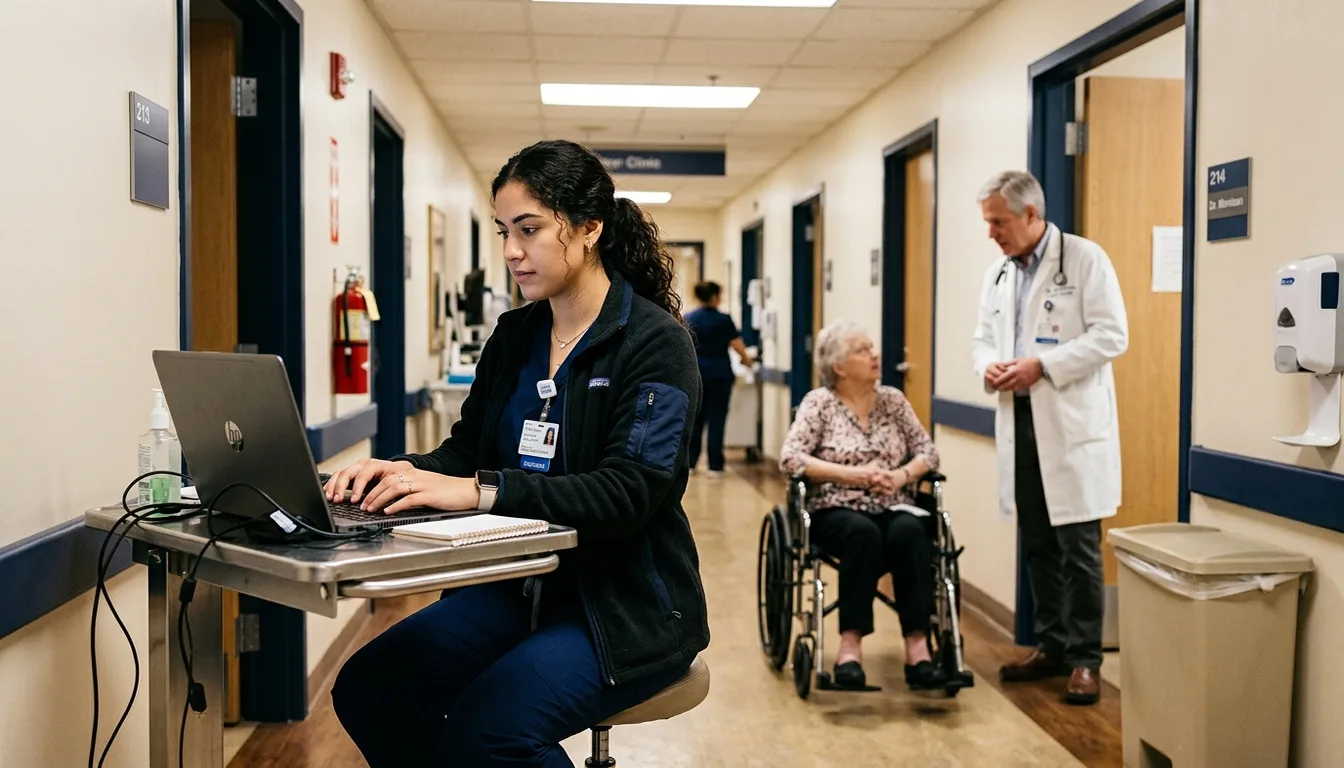
Scribing occupies a strange position in the application. It is one of the most provider-adjacent jobs a pre-PA student can hold - you spend every shift inside the clinical reasoning of a physician or PA - and yet at most programs the hours land in the HCE bucket, the one programs weight less. Understanding why, and where the exceptions are, saves you from both classification mistakes and a mis-built school list.
The short answer, and the test behind it
The default classification is HCE. CASPA's dividing line is hands-on responsibility: PCE requires that you are directly involved in the patient's care, performing tasks that affect their medical outcome. A scribe documents what others do. However close you stand to the care, the care is not yours - so under the standard definition, the hours are healthcare experience, not patient care experience.
CASPA leaves final judgment to programs, and programs apply the test differently. Some accept scribing as PCE when the role included genuine hands-on tasks - vitals, EKGs, point-of-care testing. A minority accept high-acuity scribing as PCE outright. Most read it as HCE regardless of setting. The per-program policy is the deciding fact, which makes this a school-list question as much as a classification question.
How programs actually treat scribe hours
Map the scribe question onto the three program categories from the PCE vs HCE split. At the roughly 30% of programs that require PCE specifically, scribe hours do not count toward the published minimum - a scribe-only applicant is screened out no matter how strong the rest of the file is. At the roughly 60% that accept both, scribe hours count but convert at a discount; readers weight the hands-on applicant above the documentation applicant at the same total. At the roughly 10% that weight HCE equally, scribe hours are worth face value.
That distribution is the honest planning input. A scribe with 2,000 hours does not have the accepted-applicant-average file that a tech with 2,000 hours has - the 2,669-hour PCE average is a PCE number. What the scribe has instead is a viable list at the HCE-friendly third of programs, plus assets the tech often lacks.
What scribing is actually great for
Three things, and they are not small. First, clinical vocabulary and reasoning: a year of scribing teaches you how providers think - how a differential narrows, what gets asked and why - and it shows in interviews. PA programs know this; it is why scribes interview well even when their hour bucket is weaker.
Second, proximity to letter writers. A scribe works beside the same physicians and PAs every shift, which is exactly the relationship that produces the strongest letter of recommendation in the hierarchy: a clinician who has watched you work, daily, for a year. Ask for the letter while you still share shifts, not after you leave.
Third, essay material. The personal statement wants one concrete clinical moment; a scribe's shift is full of them, observed at close range with the provider's reasoning attached.
The hybrid strategy
The strongest version of the scribe path is scribe-plus-hands-on. Two shapes work. The hybrid role: many EDs and clinics now hire scribe-techs whose duties include vitals, EKGs, splinting, or point-of-care testing - those roles produce defensible PCE (and are the case where splitting one job across categories in the CASPA Experiences section is legitimate). Or the parallel certification: keep the scribe job for the reasoning and the letters, add a part-time CNA, EMT, or MA role for the PCE bucket. Sixteen hands-on hours a week alongside scribing banks about 800 PCE hours in a year - enough to clear the sub-1,000 minimums while the scribe hours do their separate work.
Reporting scribe hours honestly
Enter pure documentation scribing as HCE, and let the description field carry the value: "documented H&Ps and MDM in real time for 4 emergency physicians; ~15 patients per shift across all acuity levels." A reader knows exactly what that role taught you, and the honest category protects the rest of your file's credibility.
If your role genuinely included hands-on tasks, split the entry by actual hours - the PCE share as its own entry with the hands-on tasks named explicitly, the documentation share as HCE. The test, as always: would your supervisor, on a verification call, describe the split the way you entered it? Programs re-run the classification themselves during review, and an optimistic entry that gets bumped back to HCE can drop you below a minimum you thought you cleared - with a credibility tax on top.
Frequently asked questions
Can I get into PA school with only scribe hours?
At some programs, yes - the roughly 10% of programs that weight HCE equally, plus programs with low or no PCE minimums. But a scribe-only file is screened out at the roughly 30% of programs that require PCE specifically. The higher-percentage play is scribe hours plus a hands-on certification role.
Does ED scribing count differently than clinic scribing?
The classification logic is the same - documentation work is HCE regardless of setting. The ED version is still usually the stronger experience: higher acuity, more provider reasoning to absorb, and better material for essays and interviews. But acuity does not change the category.
Can I split scribe duties between PCE and HCE in CASPA?
Only if you genuinely performed hands-on duties for a meaningful, documentable share of the role - some hybrid scribe-tech positions include vitals, EKGs, or point-of-care testing. Split the entry by actual hours, describe the hands-on tasks explicitly, and make sure your supervisor would describe the split the same way.
Should I take a scribe job or an MA job for PA school?
If the goal is hours that count everywhere, take the MA role - it is clear-cut PCE. Scribing wins only when it offers something the MA job cannot, like direct work beside a PA who will write your letter, or provider-level exposure you specifically want. Hybrid scribe-tech roles are the best of both.
What happens if a program reclassifies my reported PCE as HCE?
Programs apply their own definitions during review, and they can move your hours between buckets regardless of how you categorized them in CASPA. That is why optimistic classification backfires: if the reclassified total drops below the program's minimum, the file is screened out - and the reader has learned to double-check your other claims.