The Fastest Routes to PCE Hours: CNA vs EMT vs MA
"Fastest" is not the shortest course - it is certification time plus hiring speed plus the weekly hours the job actually gives you. By that math, the three standard entry paths rank differently than the course catalogs suggest. Here is the honest comparison.
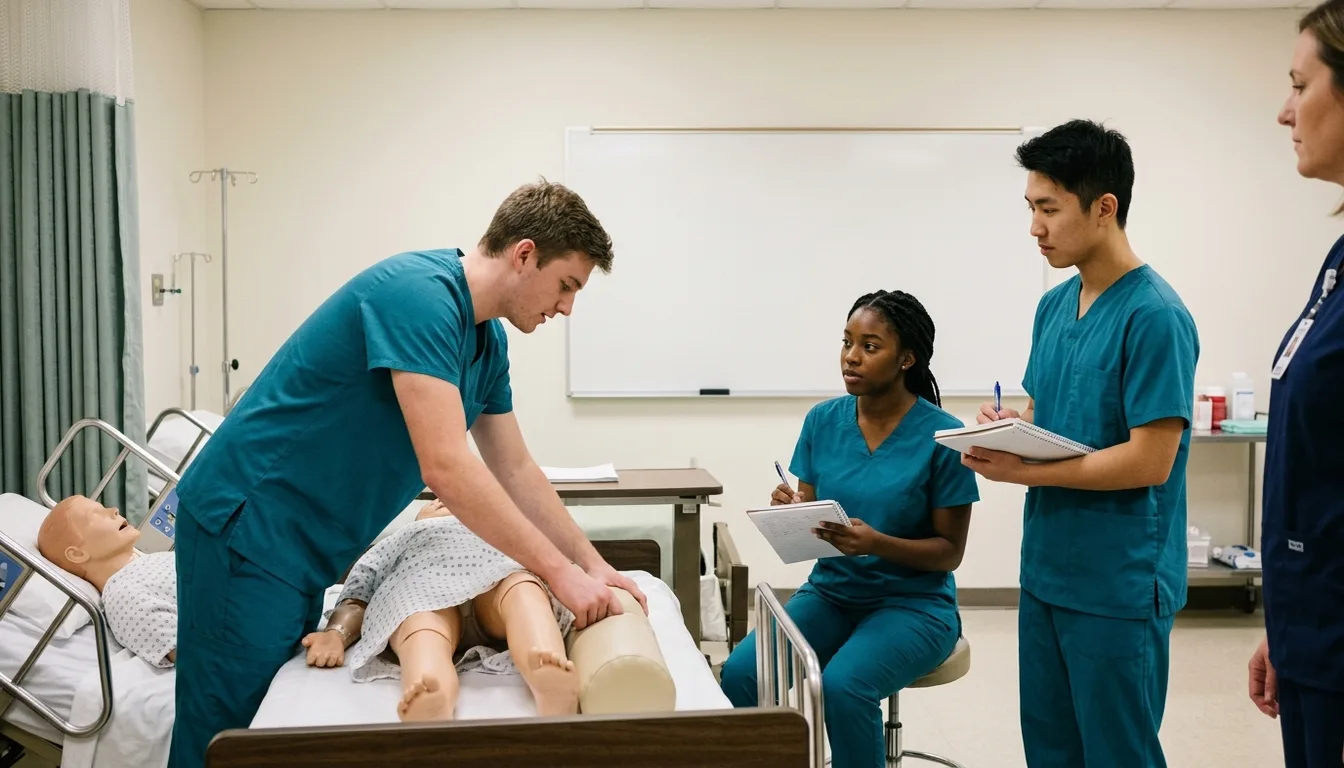
Every hour of PCE you will ever report starts with the same bottleneck: a certification. The clear-cut PCE roles nearly all require one, courses typically run $500-3,000, and the time from "I should get hours" to "I am accruing hours" is the most expensive variable in the whole plan - a month of delay at a full-time schedule is roughly 150 hours that never existed. The three standard entry paths are CNA, EMT-B, and MA. All three produce hours that count; they differ in classroom time, where you work, and what the job teaches you.
What "fast" actually means
Rank the routes on three clocks, not one. Certification time is the visible clock. Hiring speed is the hidden one - a certificate in a market with no openings accrues nothing, while nursing homes hire CNAs nearly on sight in most regions. Weekly hours is the compounding clock: the role that gives you 36 hours a week beats the role that certifies two weeks sooner but schedules you for 16. The gap-year math makes the point concrete: at 50 working weeks, every additional 8 hours per week is another 400 hours a year.
CNA: the shortest classroom path
The CNA course is the fastest and cheapest of the three - typically 4-12 weeks at community colleges, with some employer-sponsored programs running shorter. Employability is immediate and nearly universal: hospitals, skilled nursing facilities, and home health hire continuously, and full-time schedules are the default rather than the exception. The work is bedside activities-of-daily-living care - feeding, transferring, bathing, vitals - which is unambiguous, hands-on PCE at almost every program.
The honest trade-offs: the work is physically hard, the pay sits at the bottom of the three, and a skilled-nursing assignment shows you chronic care rather than the acute presentations that fill interview stories. The counter: hospital CNA roles (often titled patient care tech) put you on med-surg or ED floors with a broader case mix, and the certificate is often the entry ticket to those tech roles.
EMT: the widest door
EMT-B courses run 6-16 weeks depending on format and state. The certification opens the most varied set of doors of the three: 911 response, interfacility transport, event medicine, and - importantly for pre-PAs - the ER technician roles that many hospitals fill preferentially with EMTs. Volunteer EMT service at real call volume counts as PCE the same as paid work, which makes the route viable even in markets where paid 911 seats are scarce.
Trade-offs: course seats and state certification exams add calendar friction that CNA courses mostly lack, and pure transport work - moving stable patients between facilities - is the weakest version of the experience even though the hours count. If the local EMS market is transport-heavy, the ER tech pivot is usually the better destination for the certificate.
MA: the clinic route
The MA path is the most variable of the three. Formal certificate programs exist, but so do short-course and on-the-job routes - many clinics hire and train MAs without a lengthy program, especially candidates with a bachelor's degree and any clinical exposure. When the entry works that way, MA can match the others for speed; when the only local route is a long certificate program, it is the slowest of the three.
What the role buys: daytime clinic hours (the only route of the three with reliably normal hours), the broadest task mix - rooming, vitals, EKGs, injections, point-of-care testing - and continuous proximity to providers, which matters for letters. If you are weighing MA against scribing specifically, that comparison has its own post: the MA hours are the ones that count everywhere.
The comparison
| CNA | EMT-B | MA | |
|---|---|---|---|
| Certification time | 4-12 weeks | 6-16 weeks | Varies most: on-the-job to longer certificate programs |
| Typical course cost | $500-1,500; sponsored options common | $1,000-3,000 | $0 (on-the-job) to $3,000+ |
| PCE classification certainty | Very high (bedside care) | Very high (911/response work) | Very high in clinical roles |
| Typical settings | Hospital, SNF, home health | 911, transport, ER tech | Primary care, urgent care, specialty clinic |
| Schedule reality | Full-time easy; nights/weekends common | Shift work; volunteer options | Weekday clinic hours |
| Watch out for | Chronic-care-only case mix | Transport-only assignments | Roles that drift administrative |
Course costs and durations are ranges, not quotes - they vary by state and institution, so verify locally before enrolling.
Which route for which applicant
Still enrolled in school: CNA or EMT taken by sophomore year, then 12-16 weekend hours a week. That banks 600-800 hours per academic year and can make the pure accumulation gap year unnecessary. Graduate starting a gap year: whichever course starts soonest - in most markets that is CNA, and the calendar beats every other consideration; slot the choice into the month-by-month plan. Career changer with a day job: evening EMT courses plus volunteer or part-time response work layers hours onto an existing schedule better than the other two. Low-PCE reapplicant: speed-to-accrual is everything; pair the fastest local certificate with the low-minimum program list so this cycle's list matches this cycle's hours.
And whichever route you take: log the hours from week one - schedule, rate, running total - so the number you eventually enter in CASPA's Experiences section is calculated, not reconstructed.
Frequently asked questions
Which PCE certification is fastest overall?
CNA is typically the fastest end to end - 4-12 weeks of coursework at most community colleges, with immediate employability in hospitals, nursing homes, and home health. EMT-B is a close second at 6-16 weeks. The fastest route for you is the one with a course starting soonest and employers hiring in your market.
Does phlebotomy count as PCE for PA school?
Usually yes - drawing blood is a hands-on intervention, and phlebotomist appears on the clear-cut PCE side of most classification tables. A minority of programs read repetitive single-task roles more skeptically, so verify at your target programs before building a whole plan on it.
Do employers pay for CNA or EMT training?
Some do. Nursing homes and hospital systems in tight labor markets run sponsored CNA programs with a work commitment attached, and some EMS agencies and fire departments sponsor EMT courses. Sponsorship trades a modest service obligation for a free credential and often a guaranteed start date - usually a good trade for a gap-year applicant.
Do PA programs prefer one PCE job over another?
Programs screen on hours and category, not job title. A CNA, EMT, and MA with the same total are treated similarly at the screen. Differences show up later - in what your letters and essays can say - so pick the role whose setting matches the stories you want to tell.
Can I earn PCE hours part-time while still in school?
Yes - a 12-16 hour weekend schedule as a CNA, EMT, or MA banks 600-800 hours per academic year without destroying a course load. Students who certify by sophomore year routinely graduate with 1,500+ PCE hours and skip the pure accumulation gap year entirely.