PCE Jobs Without Certification: What to Check Before Applying
Some patient-care jobs offer training after hiring, so a long certificate program is not always the first step toward PA-school experience. But “no certification required” describes an employer’s hiring requirement. It does not establish whether a PA program will accept the work as PCE.
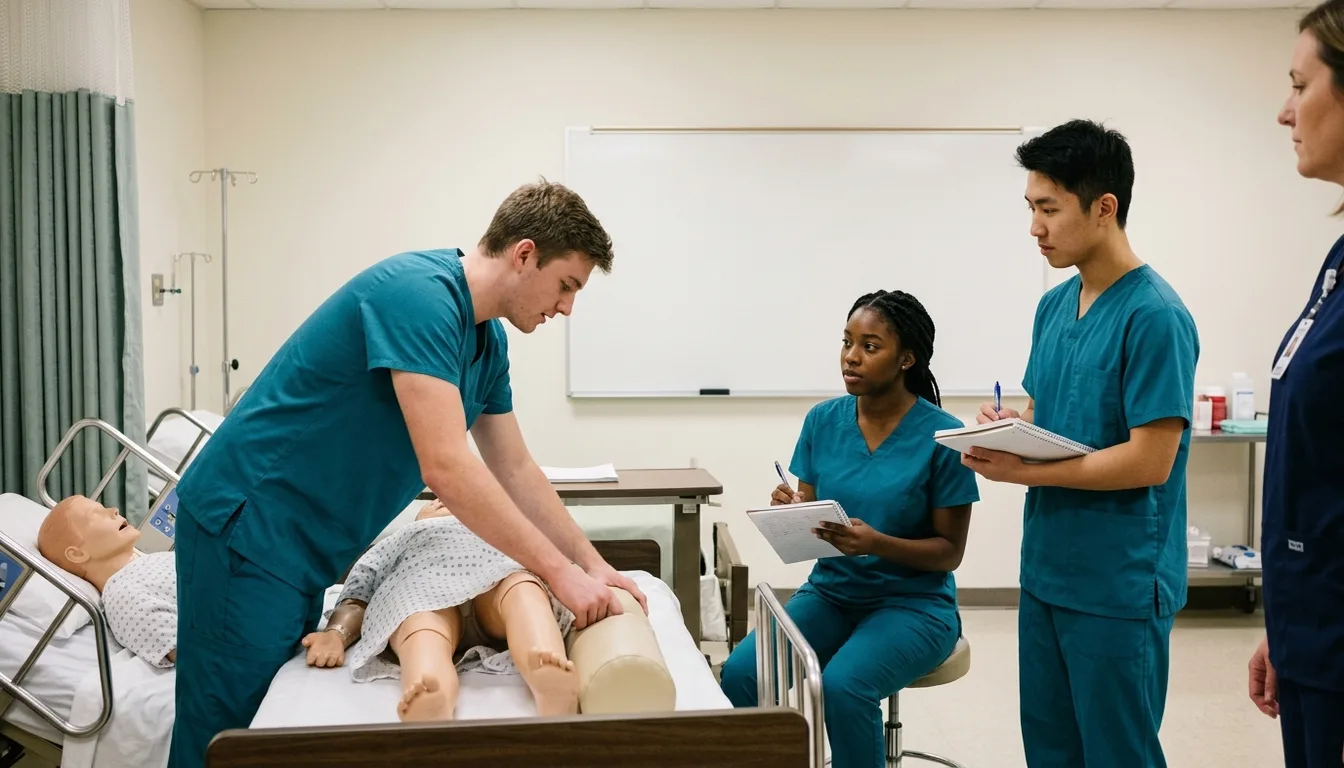
Start with two roles worth investigating
Physical therapy aide. The Bureau of Labor Statistics says aides typically need a high school diploma or equivalent and on-the-job training. This is different from becoming a physical therapist assistant. Ask whether an advertised aide or rehab-tech position includes patient involvement or mainly cleaning, equipment preparation and reception.
Medical assistant with employer training. BLS describes workplace-training routes for some medical assistants, although postsecondary education is typical. Requirements vary by state and employer; some require certification or other qualifications. Treat an opening that explicitly offers training as a lead to investigate, not evidence that all MA jobs are open without a credential.
Both job titles appear in UC Davis’s examples of patient-care experience. Your own duties and the policies of your chosen schools still matter. Our PT aide guide explains how to document that role.
Search for duties and training, not just a title
Try combinations such as “medical assistant paid training,” “physical therapy aide entry level,” or “rehabilitation technician training provided,” together with your location. Read the requirements and responsibilities sections before spending time on an application.
Separate “preferred” credentials from mandatory ones. Also distinguish a job that trains new hires from a training course that charges tuition. Save the posting so you can compare what was advertised with the responsibilities discussed during an interview.
Ask the employer these questions
- Which qualifications must I have before starting, and which can I complete after hiring?
- Is training paid, and when would I begin the patient-facing assignment?
- What does a typical shift involve, including administrative work?
- How are new employees supervised and assessed before taking on tasks?
- What hours are realistically available around my classes?
A specific answer is more useful than “great experience for pre-PA students.” The employer can explain the job. The PA program determines whether it meets that program’s admissions requirement.
Check acceptance before building your hour plan
Send the job description to priority programs when they offer experience reviews. Identify the exact role, duties, setting and supervision. Ask about any substantial nonclinical component and whether training hours count. Keep a record of the response rather than relying on what a previous employee heard in another cycle.
Be especially careful with broad search results for caregiver, scribe or hospital support positions. Those titles are worth investigating, but acceptance and hiring requirements vary. See our separate home health aide and medical scribe guides before assuming they solve your PCE requirement.
Compare the calendar as well as the training cost
Use a hypothetical comparison: one offer starts in two weeks and provides 12 accepted hours weekly; another starts in eight weeks and provides 24. Over the next 20 weeks, that is roughly 216 versus 288 hours, assuming continuous work after starting. An earlier start does not always produce more completed experience by your deadline.
Replace those assumptions with actual start dates, expected schedules and accepted duties. Account for exams, holidays and unpaid gaps. Count completed hours separately from projections, and do not label an estimate as guaranteed employment.
Keep a credentialed option in the comparison
If suitable local openings require credentials, compare their training time and cost with the jobs you can actually obtain now. The purpose is to find a workable route to accepted experience. Our CNA, EMT and MA route comparison covers that next decision.